
If 2025 felt like the year ACF worked in the background while you got everything else done, that wasn’t accidental.
This year focused on making custom fields feel less like configuration and more like a natural part of building content in WordPress.
Editing became faster. Blocks became more powerful. And long-requested workflows landed with a bang — without forcing you to relearn how ACF works.
From Inline Editing to the next generation of ACF Blocks, 2025 delivered improvements that saved time, reduced friction, and made complex builds easier to manage.
TL;DR — In 2025, you got full support for WooCommerce HPOS, major quality-of-life upgrades for Flexible Content, ACF Blocks Version 3 built on the modern Block API, and Inline Editing that lets you update content directly on the page. All of it shipped across 14 releases, with accessibility, performance, and security improvements baked in.
All of this work is driven by our team, the trusted maintainers of ACF since 2021. I’m proud to work alongside a talented group of engineering, design, content, and user research folks that truly know the product and are leading the way with thoughtful, valuable innovation that reinforces why ACF remains the trusted standard for the WordPress community.
Here’s what that meant for you.
Achievements
Awards are nice, but the real achievement in 2025 was simpler:
ACF got way easier to grow with.
For the fourth year in a row, ACF PRO was voted the top Dynamic Data Plugin in The WP Awards — a signal that it continues to be the foundation many developers rely on for serious WordPress builds.
But more importantly, the changes this year focused on the moments that matter most:
- Editing content without losing context
- Managing complex field layouts without frustration
- Building modern block-based sites without fighting the editor
This consistent recognition highlights the importance of ACF as a foundation for building tailored digital experiences, and we are incredibly grateful to everyone who voted.
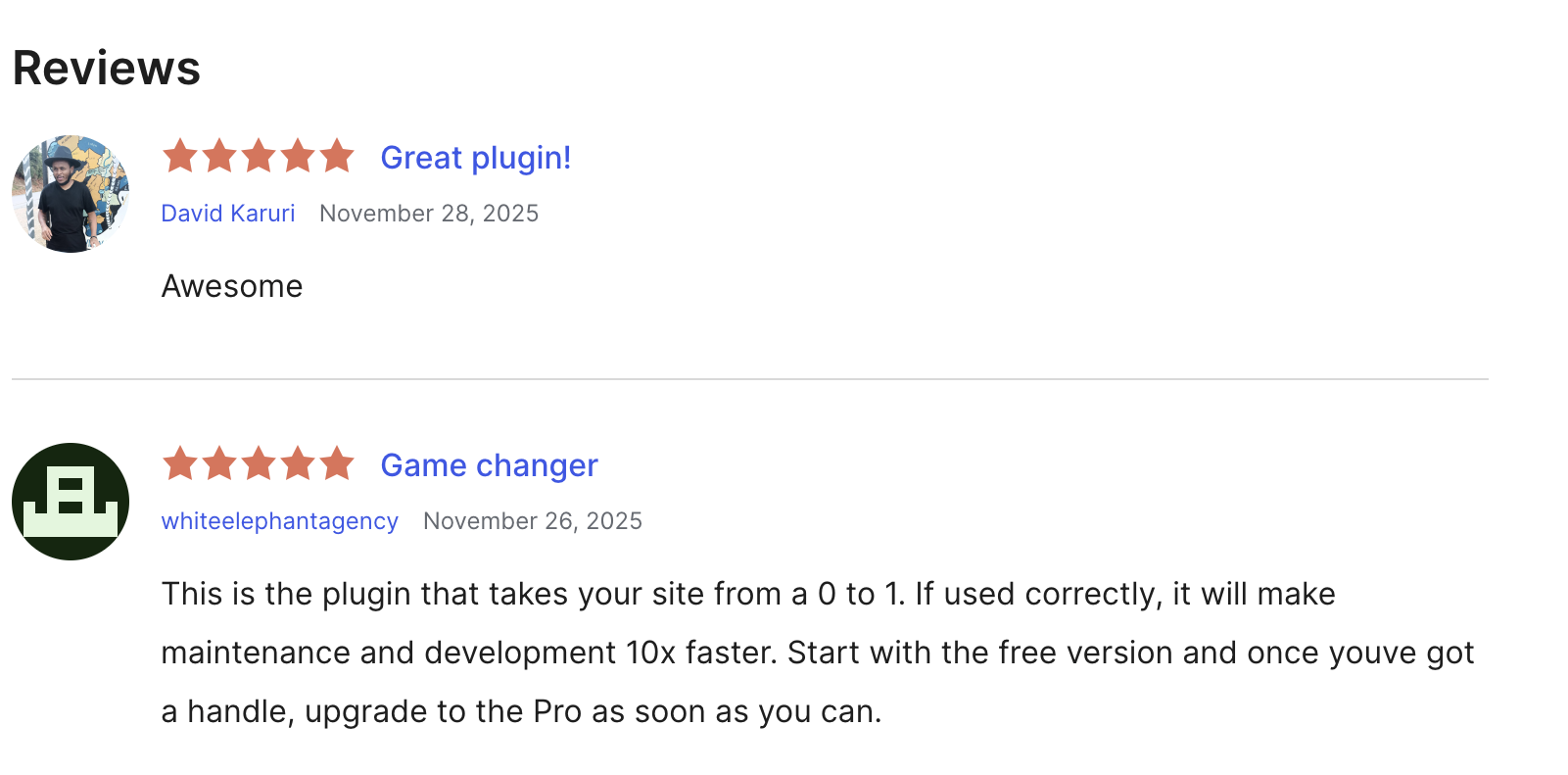
It’s great to see ACF recognized in awards, but we also love seeing you recognize just how useful ACF is:
Plugin Releases
In 2025, ACF didn’t just add features — it steadily refined how the plugin works, feels, and fits into the modern WordPress ecosystem.
Over the course of the year, you received 4 major version releases and a total of 14 releases overall, each focused on making ACF more reliable, more compatible, and easier to work with day to day.
Behind those releases was a clear direction:
- modernize the codebase
- keep pace with WordPress and WooCommerce changes
- remove friction from the content editing experience.
Whether you were building complex field structures, managing dynamic layouts, or handing sites off to non-technical editors, these updates were designed to make your work smoother — without forcing you to change how you already use ACF.
ACF 6.4: HPOS Support and Performance
If you build or maintain WooCommerce stores, ACF 6.4 quietly removed a major future worry to give better workflows.
With full support for WooCommerce High-Performance Order Storage (HPOS), your custom fields now scale properly as order data moves to custom tables. That means:
- Better performance on large stores
- Fewer surprises as WooCommerce evolves
- Custom data that grows safely alongside your business
Under the hood, ACF also modernized how field values are stored and loaded — improving performance without changing how you work.
ACF 6.5: Flexible Content Reimagined
Flexible Content is one of ACF’s most powerful tools — and historically, one of the most complex to manage. In August 2025, that changed with ACF 6.5.
You gained:
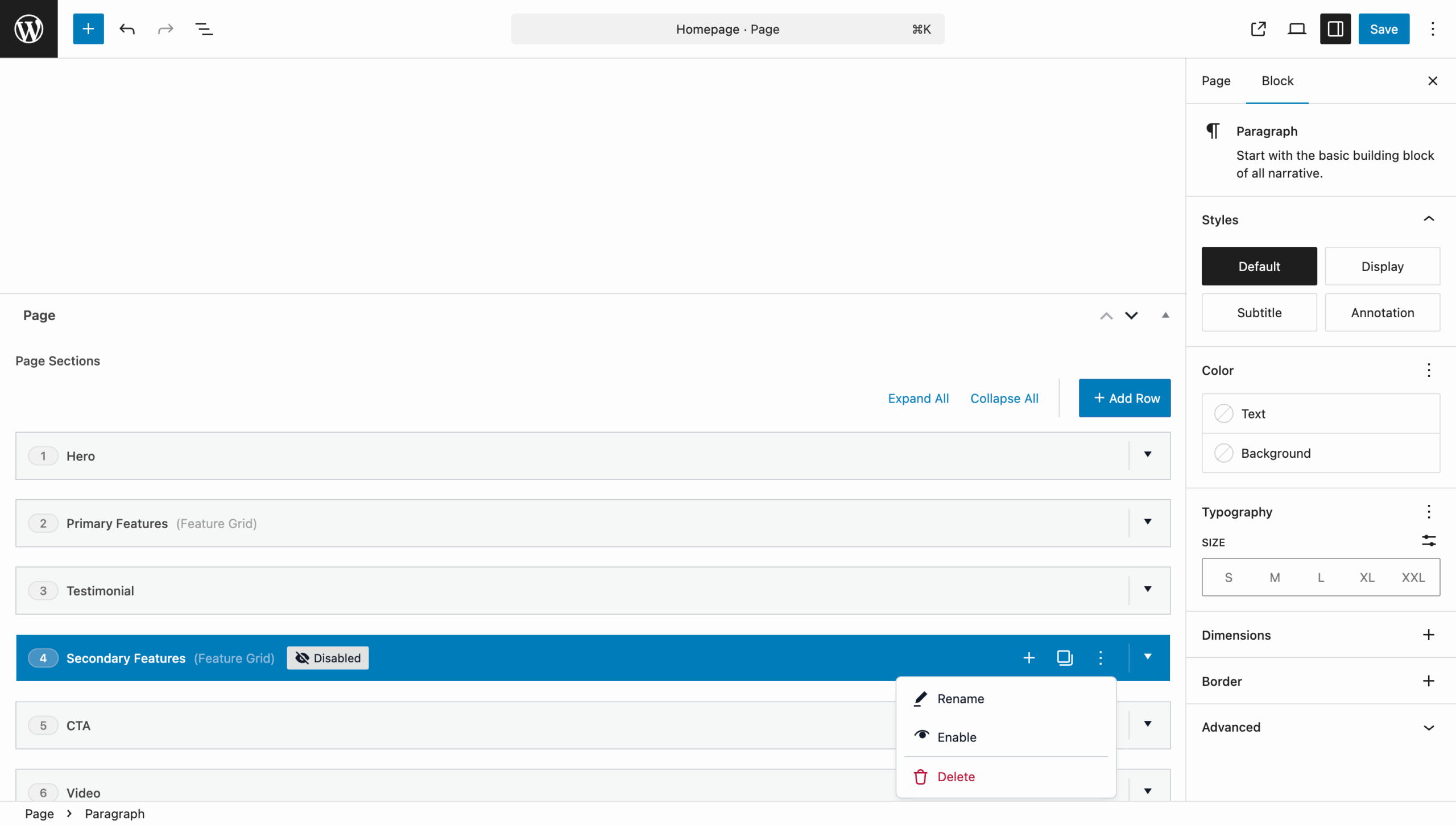
- Rename Layouts: Editors can now rename layouts directly in the post editor (e.g., changing “Layout” to “Pricing CTA”) without changing the underlying key.
- Disable Layouts: You can now disable a layout to hide it from the frontend without deleting the content—perfect for staging seasonal content.
- Highlight Active Layout: The layout you are currently editing is visually highlighted, helping you stay focused in long lists of fields.
- Bulk Actions: We added the ability to collapse or expand all layouts at once to tidy up the editor view.
These changes didn’t add new concepts. They removed friction from the ones you already rely on.
You can also leverage a frequently requested feature added to the Date Picker and Date Time Picker fields, allowing them to default to the current date.
ACF 6.6: Building Better Blocks
ACF Blocks Version 3 in ACF 6.6 marked a major shift.
By adopting the modern WordPress Block API, block previews became isolated, predictable, and accurate — matching the frontend far more closely than before.
The new expanded editing panel gave complex fields room to breathe, especially for Repeaters and Galleries.
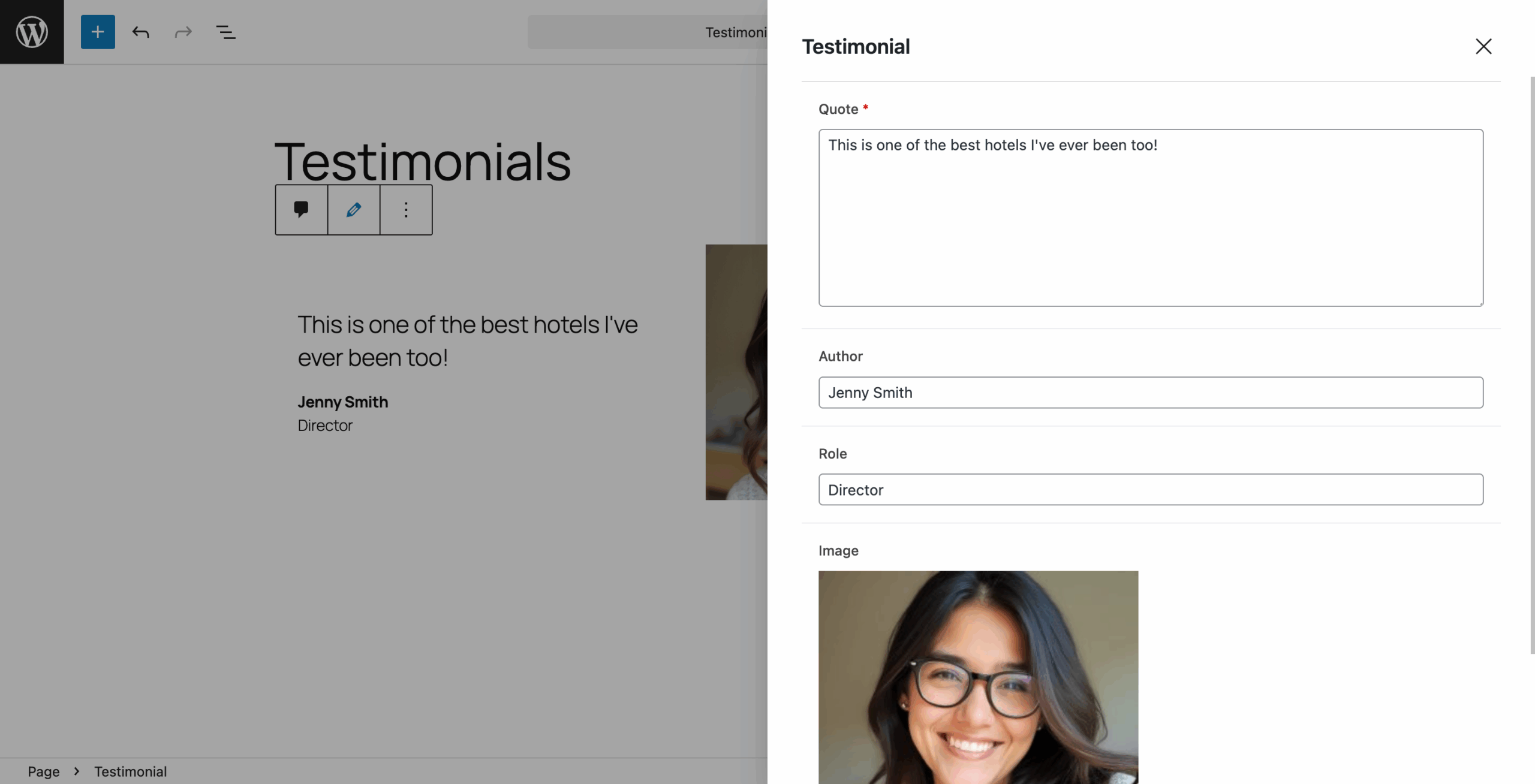
You also gained:
- Display Titles: You can now give Field Groups a separate “Display Title” for the editor UI, keeping your internal naming conventions clean.
- Color Picker Palettes: Developers can now define custom color palettes or inherit colors directly from theme.json.
The result: blocks that behave like first-class citizens in the block editor — without sacrificing ACF’s flexibility.
ACF 6.7: Inline Editing
We saved the best for last. In December, ACF 6.7 gave life to the most requested feature—Inline Editing for ACF Blocks V3.
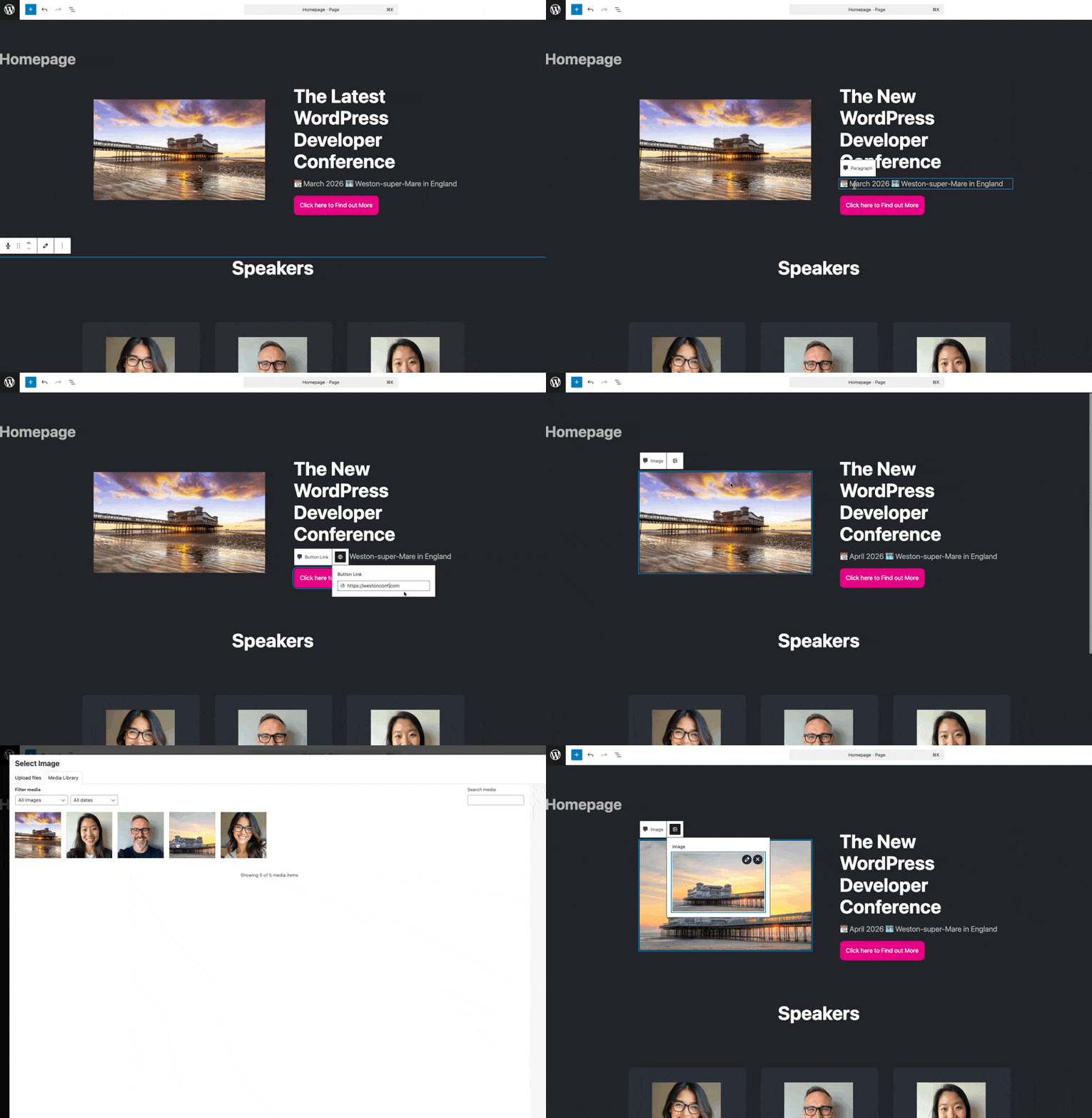
With Inline Editing, you can now update ACF Block content directly where it appears — no sidebar hopping, no context switching.
Depending on the field type, you can choose between two experiences:
- Text Editable: For Text and Text Area fields, it offers a native-like typing experience directly on the page.
- Toolbar Editable: For other field types like Images or Choices, clicking the element reveals a pop-up toolbar for quick edits.
Developers can opt-in to this feature easily by setting "autoInlineEditing": true in block.json, or by using our new helper functions for granular control.
Inline editing is transformative for content editors, making the ACF Blocks experience as good as, or better than, native blocks for complex, structured content.
Security Enhancements
Security improvements rarely make headlines — and that’s a good thing.
Throughout 2025, ACF shipped enhancements that:
- Improved HTML sanitization by utilizing DOMPurify
- Tightened escaping and access controls to prevent potential vulnerabilities
- Reduced the risk of unintended data exposure in the editor UI
None of this changed how you build. All of it made your sites safer by default.
ACF Community and Feedback
ACF doesn’t evolve in a vacuum — and in 2025, your feedback mattered more than ever.
Annual Survey Results
The 2025 annual survey (with 900+ responses) showed clear patterns:
- Developers lead the way: 79.17% of users identify as Developers/Engineers.
- ACF Blocks are essential: 52.26% of respondents use ACF Blocks for building custom content, far outpacing native blocks or custom React blocks[cite: 529].
- AI adoption: For the first time, we asked about AI. 75.93% of you are using AI for development and code, while 33.33% use it for content creation[cite: 579, 584, 585].
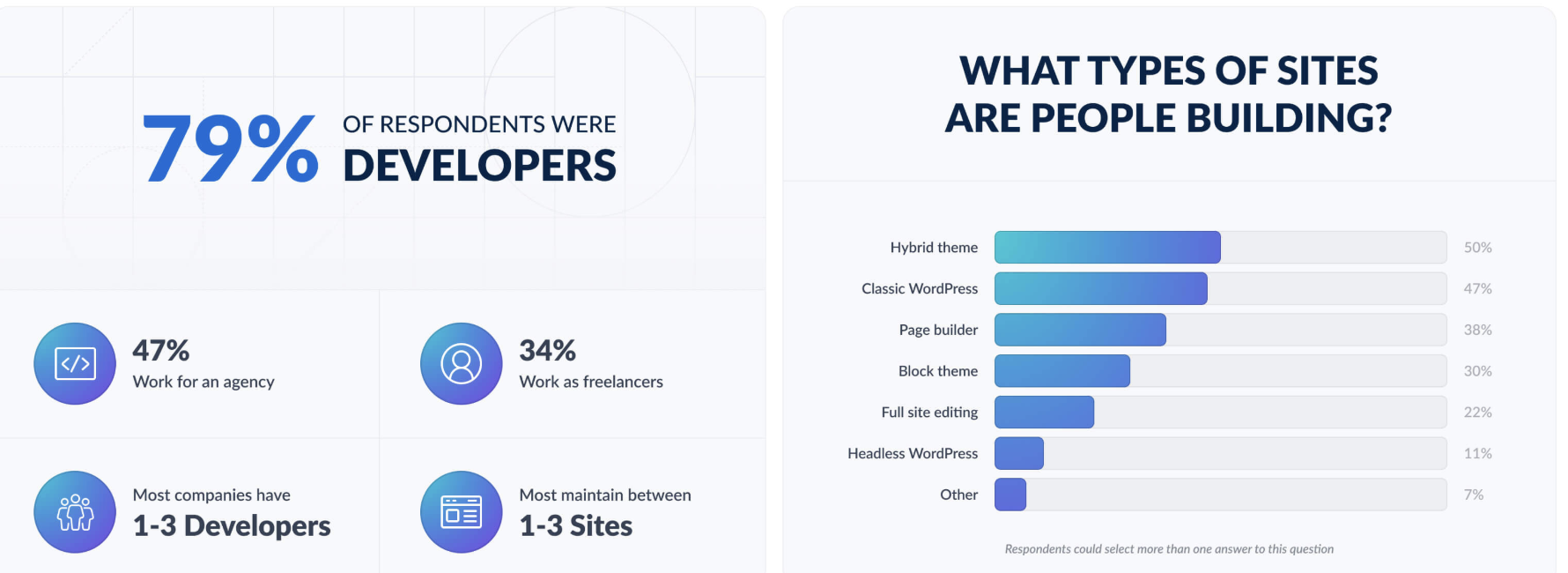
You can check out the full breakdown of the results in our 2025 Survey Results blog post.
ACF Chat Fridays
ACF Chat Fridays continued to be the place where ideas turned into features. Inline Editing, Flexible Content improvements, and Blocks V3 were all shaped by real conversations with real users — not assumptions.
If you joined even one session, you’ve already influenced what ships next.
This year, we held a total of 10 sessions, covering everything from open Q&As to deep dives into major releases.
Some of the highlights included an early, exclusive demo of Inline Editing for ACF Blocks, a walkthrough of the new Flexible Content features in ACF 6.5, showing how to rename and disable layouts to improve the editorial workflow, two sessions dedicated to ACF 6.6 and Blocks V3, finally closing out the year with a celebration of the official launch of Inline Editing.
If you haven’t joined us yet, you are missing out on the best place to talk shop with the ACF team and other developers. You can register for the next session here.
Statistics
Let’s look at the numbers that defined 2025.
Development
The engineering team shipped 14 releases in 2025, including 4 major releases (6.4, 6.5, 6.6, 6.7). In total, we pushed 2,107 commits of code.
Support
Our support team continues to be the backbone of ACF, helping users navigate everything from simple setup questions to complex implementations.
- Answered a total of 6,496 new tickets
- Sent a total of 10,298 replies
- An average of 541 tickets per month
- Average customer satisfaction score of 89.6%
Usage
ACF continues to power a massive portion of the web, with over 2 million active installs of the free version. WordPress.org reports that 29.3% of those users are running ACF 6.7. This was released in early December of 2025.
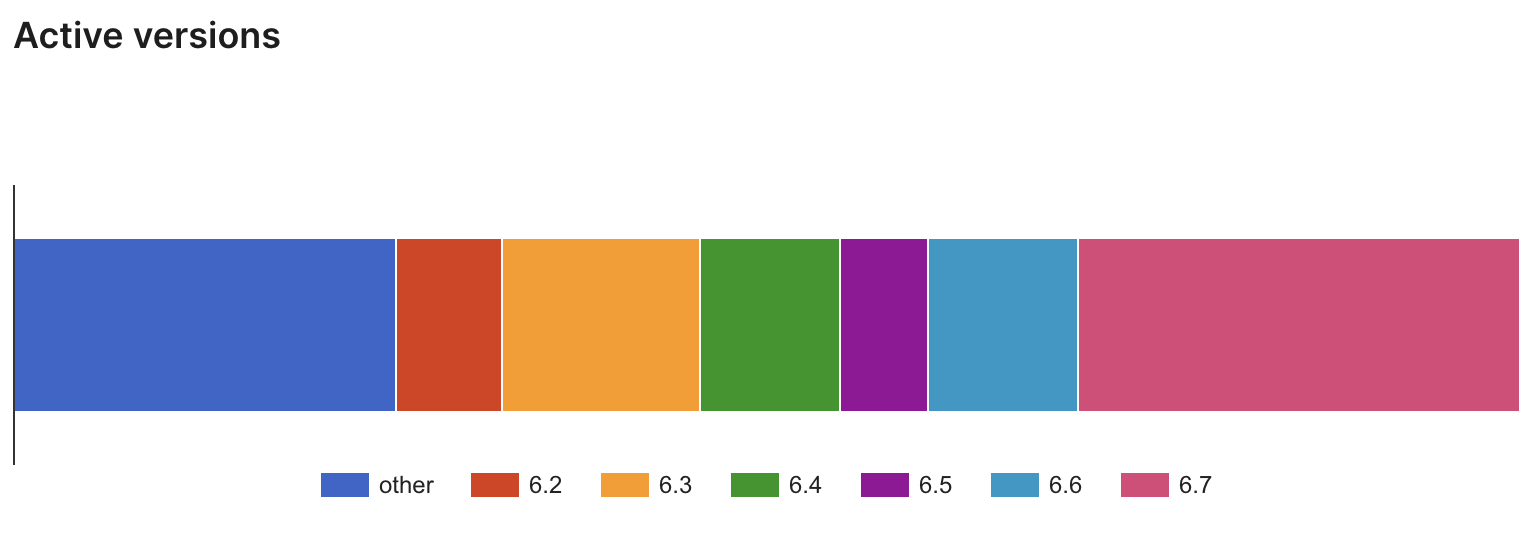
Let’s have a look at data about sites that activated ACF PRO in 2025:
ACF Major Version
| ACF version | % sites |
|---|---|
| 6.4 | 38.5% |
| 6.3 | 27.7% |
| 6.5 | 11.7% |
| 6.6 | 10.8% |
WordPress Version
| WP version | % sites |
|---|---|
| 6.8.1 | 22.46% |
| 6.8.2 | 19.47% |
| 6.8.3 | 17.96% |
| 6.7.2 | 15.28% |
| 6.7.1 | 9.71% |
| 6.9 | 5.63% |
PHP Version
| PHP version | % sites |
|---|---|
| 8.2 | 41.2% |
| 8.3 | 19.4% |
| 8.1 | 14.9% |
| 7.4 | 10.7% |
| 8.4 | 7.0% |
I’m particularly pleased to see the continued increase in use of PHP 8+ this year, with PHP 7.4 dropping down to 4th in the table.
ACF in 2026
We are already hard at work on the next version of ACF, and 2026 is shaping up to be a transformative year. The first beta of ACF 6.8 shipped at the end of 2025 — and it points clearly to what’s next.
Integration with the WordPress Abilities API opens the door to:
- Smarter automation
- AI-assisted content modeling
- Structured data that tools can safely understand and use
This isn’t about chasing trends. It’s about making sure the data you model today still matters tomorrow — in search, AI, and whatever comes next.
We are exploring new ways to leverage ACF’s structured data to help sites surface more effectively in Large Language Models (LLMs) and AI overviews. This focus is critical to ensuring your content maintains visibility and relevance in an evolving search landscape, mitigating the risk of organic traffic loss.
Inline Editing will continue to expand. Performance improvements in the editor will continue quietly. And ACF will keep focusing on what it does best: structured content that adapts to change.
You can learn more about the upcoming release in our ACF 6.8 Beta 1 release post or during the January 9 session of ACF Chat Fridays. If you’d like to get notified of pre-release versions as we release them, sign up here.
Thanks
Everything you got in 2025 exists because people keep choosing ACF for serious work.
Whether you:
- Voted in awards
- Joined Chat Fridays
- Filled out the survey
- Or simply shipped another great site with ACF
Our biggest thanks go to you – the ACF community. You’re the reason this plugin continues to evolve thoughtfully — not reactively, and keeps ACF as the trusted standard.
I’d like to thank the entire ACF team and everyone at WP Engine for another year of incredible work. Delivering features like Inline Editing and Blocks V3t required a massive effort, and the results speak for themselves.
More From Our WP Engine Family
As part of the wider WP Engine family, our sister products were also busy in 2025. Here are some of the great features and releases they shipped to the WordPress community:


For plugin support, please contact our support team directly, as comments aren't actively monitored.